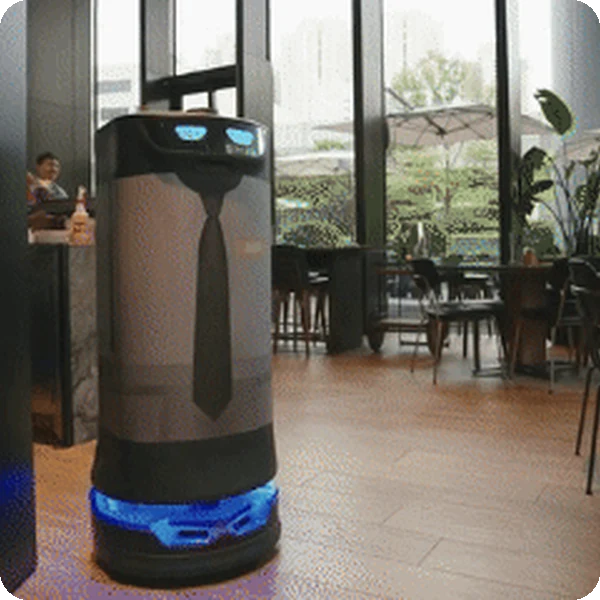

- Best for restaurants, hospitals, hotels and factories
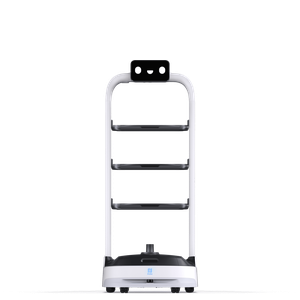
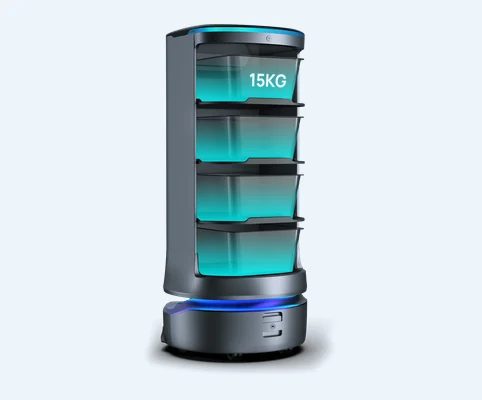
- Carries up to 60 kg and 120 L in four large trays
- Voice, air-motion and pager control for contact-free tasks
Move heavier loads automatically with the HolaBot
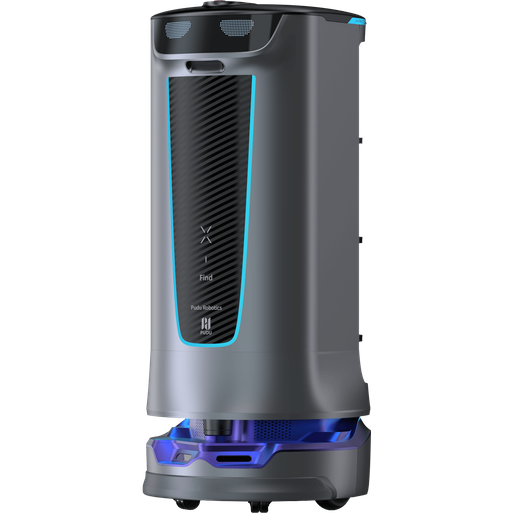
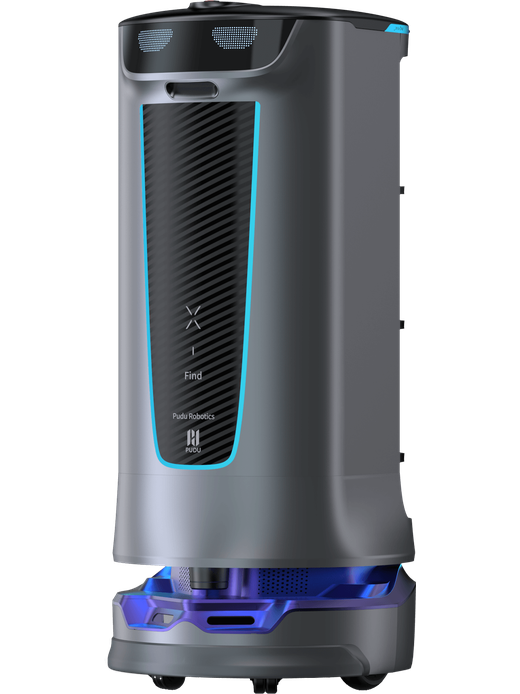
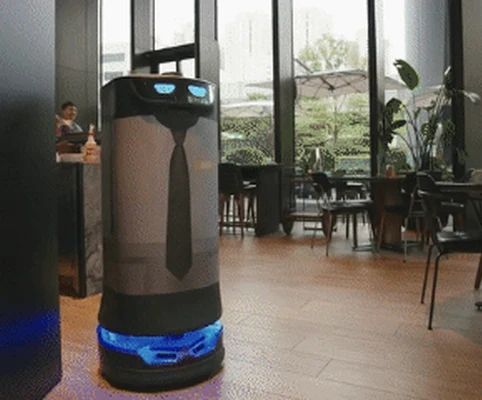
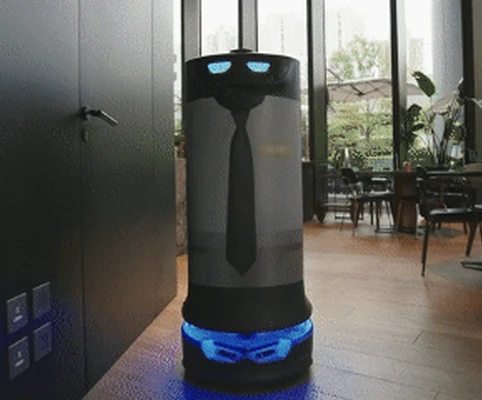
Pudu HolaBot applies autonomous delivery to food, medical and other fields. With a high carrying capacity, an IPX5 waterproof cabin, pagers and a voice control module, HolaBot boosts turnaround efficiency in restaurants and helps establish smart hospitals.
Best for
Heavy and high-volume delivery
Primary task
Bussing, delivery and transport
Environment
Restaurants, hospitals, hotels, factories and offices
Deployment type
Mapped autonomous deployment, with SPARK site assessment, training and ongoing support
Move heavy loads and dirty dishes without wearing out your team
Bussing, medical deliveries and supply runs involve heavy, messy loads and many repetitive trips.
Bussing heavy trays wears staff out
Clearing tables and carrying heavy loads takes many tiring trips.
Ultra-large capacity.
HolaBot carries up to 60 kg and 120 L across four large trays, giving restaurants much better turnover.
Liquids spill inside the cabin
Dirty dishes and drinks splash and make machines hard to keep clean.
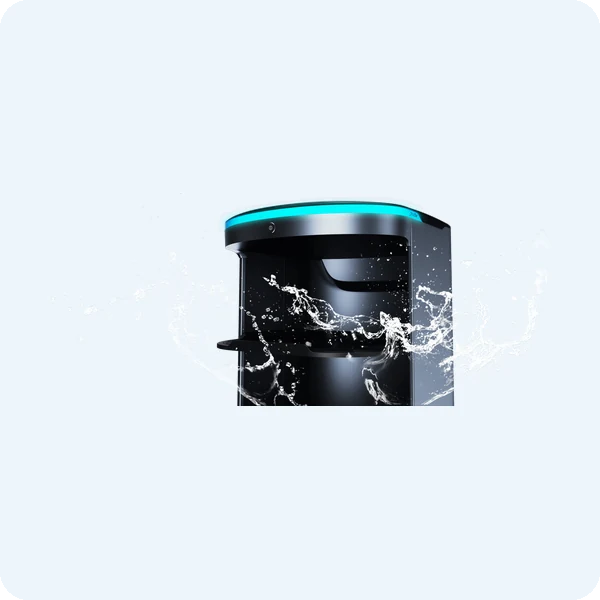
IPX5 waterproof inner cabin
The IPX5 waterproof inner cabin resists liquid splashes and keeps the machine body clean.
Touching shared machines spreads germs
In hospitals and kitchens, contact with screens and buttons is a hygiene risk.
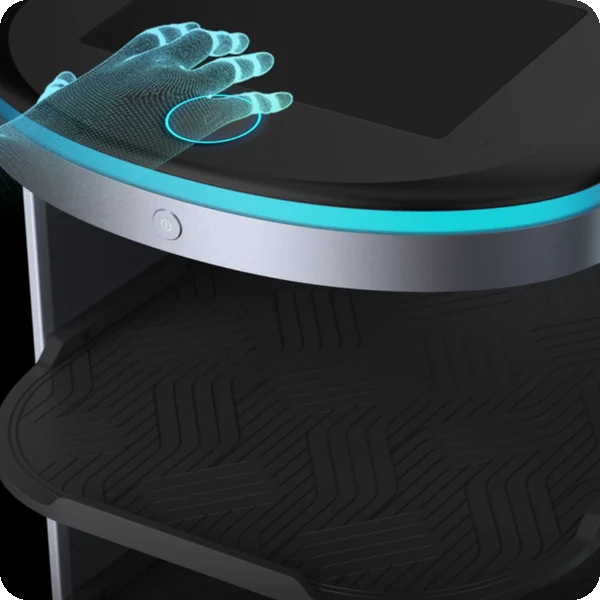
Air motion control
HolaBot can be controlled without contact, making interaction safe and efficient.
Staff need to call the robot from anywhere
Waiting for a robot to come back slows down service.
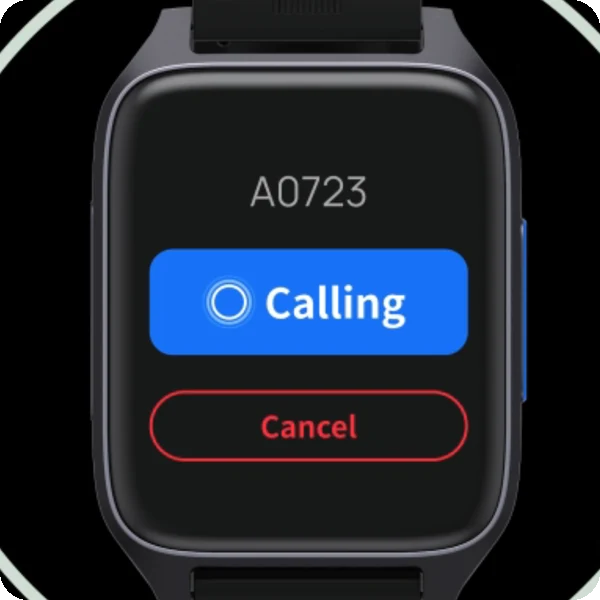
Sound tracking & pager
“Hola Hola” voice recognition with a 6-array microphone turns HolaBot towards the caller, and pagers assign tasks at any time.
Key outcomes
High load capacity
Carry more in fewer trips. HolaBot moves heavy or multiple items such as food trays, lab samples or documents.
60 kg load · 120 L volume · 4 large trays · IPX5 waterproof cabin.
Cuts down manual labour for repetitive delivery tasks.
Real-Time
Communication
Dispatch tasks the moment they are needed. Pager and voice control keep staff in charge.
“Hola Hola” voice recognition · 6-array omnidirectional microphone · air-motion control · pager function.
Staff can easily manage and interact with the robot without contact.
Flexible & smart navigation
Deliver through complex indoor spaces. HolaBot avoids obstacles and adapts to dynamic, high-traffic environments.
Laser + RGB-D SLAM · 0.5–1.2 m/s cruise speed · 4G / Wi-Fi.
Keeps deliveries moving in busy restaurants, hospitals and factories.
Long working days
Keep the robot available for full shifts. A replaceable battery supports long operation.
10–24 h battery life · 25.6 Ah replaceable battery · ~4.5 h charging.
Especially beneficial where staff shortages or high turnover make delivery hard.
What powers the HolaBot's heavy-duty delivery
Ultra-large capacity
IPX5 waterproof cabin
Sound tracking
Air motion
Pager function
Contact-free medical delivery
How it works
01.
Map or configure
Prepare HolaBot for your site. The space is mapped, destinations are set and pagers are paired.
What the HolaBot handles
Uses laser and RGB-D SLAM to map and localise itself.
Where people step in
Initial mapping and set-up require human input.
The exact SPARK deployment process TBC
02.
Run the workflow
Staff call HolaBot with a pager or “Hola Hola”, load the trays and send it on its way, using air-motion controls without touching the robot.
What the HolaBot handles
Carries out delivery, bussing and transport trips with obstacle avoidance.
Where people step in
Staff load and unload items and assign tasks. Exact exception procedures TBC
03.
Monitor and improve
Keep deliveries aligned with your operation, adjusting destinations and routes as needs change.
What the HolaBot handles
Reports status over 4G or Wi-Fi.
Where people step in
People remain responsible for reviewing performance and deciding when adjustments, maintenance or further configuration are needed. TBC
Use cases and environments
Product in action
HolaBot "Hola Hola" sound tracking
HolaBot air-motion control
HolaBot pager calling
Technical specifications
Specification
- Max. load
- Volume
- Trays
- Cruise speed
- Voice
- Gesture control
- Calling
- Noise
HolaBot
- Up to 60 kg
- 120 L
- 4 large trays
- 0.5–1.2 m/s
- "Hola Hola" recognition
- Air motion
- Pager function
- TBC
Specification
- Machine dimensions
- Machine weight
- Inner cabin
- Microphone
- Tray size
- Display
- Min. passing width
- Colour options
HolaBot
- 541 × 531 × 1226 mm
- 55–60 kg
- IPX5 waterproof
- 6-array omnidirectional
- TBC
- TBC
- TBC
- TBC
Specification
- Navigation
- Obstacle avoidance
- Sound source location
- Contact-free interaction
- Sensors
- Elevator integration
- Door integration
- Safety certification
HolaBot
- Laser + RGB-D SLAM
- Dynamic, high-traffic environments
- Real-time
- Air motion
- LiDAR, RGB-D
- TBC
- TBC
- TBC
Specification
- Battery
- Battery life
- Charging time
- Battery swap
- Auto charging
- Charging method
- Rated voltage
- Battery type
HolaBot
- 25.6 Ah, replaceable
- 10–24 h
- ~4.5 h
- Replaceable
- TBC
- TBC
- TBC
- TBC
Specification
- Network
- Pager
- Voice control
- Fleet management
- Remote monitoring
- Reports
- Software updates
- Third-party integration
HolaBot
- 4G / Wi-Fi
- Supported
- Supported
- TBC
- TBC
- TBC
- TBC
- TBC
Specification
- Environment
- Liquid splashes
- High-traffic spaces
- Ingress protection (body)
- Operating temperature
- Max. slope
- Max. threshold height
- Floor types
HolaBot
- Indoor restaurants, hospitals, hotels, factories
- IPX5 inner cabin
- Supported
- TBC
- TBC
- TBC
- TBC
- TBC
Specification
- Trays
- Pagers
- Replaceable battery
- Charging pile
- Tray dividers
- Cabin covers
- Spare battery
- Spare parts kit
HolaBot
- 4 large trays
- Supported
- Included
- TBC
- TBC
- TBC
- TBC
- TBC
Deployment and integration
From site survey to launch, SPARK prepares your robot for your site, your workflow and your team.

01 — Site survey
We assess your requirements and site conditions to help plan your robot deployment.

02 — Mapping
The operating area is mapped for autonomous operation before handover.
03 — Workflow design
We develop a deployment plan around your site and operational requirements.

04 — Integration
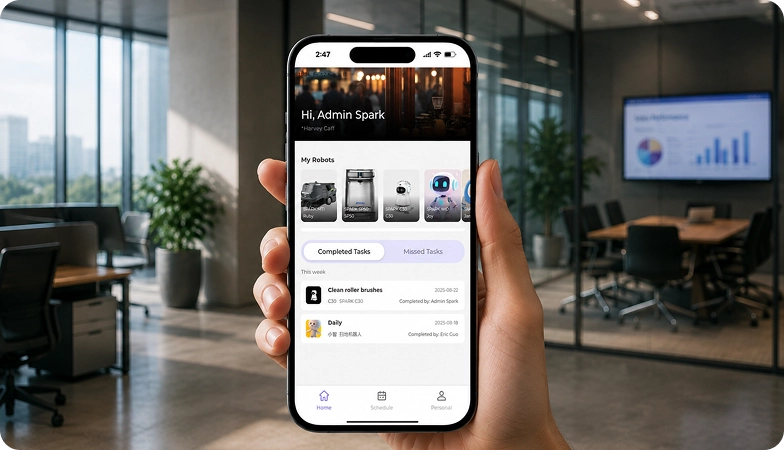
Integration requirements are assessed for each deployment, while tasks, schedules and reports are managed through the app.
05 — Training
SPARK provides user training as part of its after-sales support.
06 — Launch
Launch follows completion of site preparation, mapping, workflow setup and training.

Site Assessment
Understand the facility, floor types, traffic patterns and operational requirements.

Robot Deployment
Introduce the robot into daily operations with minimal disruption.
Mapping
Configure operating areas and routes according to the environment.
Remote Monitoring
Monitor robot operations and receive performance information through the app.

Training & Handover
Provide operators with the knowledge needed to manage the robot day to day.

Ongoing Optimization
Adapt maps and update software as the facility evolves.

Training & Handover
Provide operators with the knowledge needed to manage the robot day to day.

Remote Monitoring
Monitor robot operations and receive performance information through the app.

Ongoing Optimization
Adapt maps and update software as the facility evolves.

Site Assessment
Understand the facility, floor types, traffic patterns and operational requirements.

Mapping
Configure operating areas and routes according to the environment.

Robot Deployment
Introduce the robot into daily operations with minimal disruption.
What SPARK adds
We are not a box shifter. Deployment covers site survey, mapping, workflow design, integration planning, training and launch — so your robot arrives configured for your building rather than dropped at your loading bay.
If the survey shows the robot is wrong for your site, we will say so.
upSPARK and ongoing support
From installation and user training to software updates and on-site maintenance, we provide full after-sales support.

Technology That Keeps Improving
Every SPARK robot is managed through its manufacturer app and cloud platform, where operators can schedule tasks, monitor each robot remotely and review performance reports. SPARK supports you from installation and training through to software updates and maintenance.

maintenance tasks
Routine maintenance is kept simple, with clear schedules for brushes, filters, tanks and other consumables. SPARK guides your team through each task so the robot stays ready to work.

scheduling
Tasks and schedules can be set and adjusted through the app or control panel, so the robot works at the times that suit your site, including out of hours.

guided maintenance
SPARK provides step-by-step guidance for maintenance tasks, helping your team keep the robot running reliably with minimal downtime.

expert support
Our UK-based team provides expert after-sales support, including troubleshooting, on-site maintenance and help with optimising your robot routines.
Safety, compliance and governance
Compliance
Certification and conformity
Declaration of Conformity and certification documents for this robot are available on request for technical and procurement review.
Obstacle handling and safety
360° Environmental Awareness
SPARK robots use onboard sensors to detect obstacles, slow down or stop, and reroute where required. Detailed safety behaviour is covered in the product documentation.
Operating boundaries
Mapped operating areas
The robot operates within the mapped areas and configured routes set up during deployment. Operating conditions are listed in the technical specifications above.
Data and privacy
App and cloud management
Tasks, schedules and reports are managed through the manufacturer app and cloud platform. Details of data handling and privacy are shared as part of deployment planning.
Documents for review
Documentation pack
The user manual, specification sheet and conformity documentation can be shared for technical and procurement review.
Choosing between Spark delivery robots
BellaBot
BellaBot Pro
PuduBot 2
HolaBot
Frequently asked questions
Questions about using the HolaBot at your site
Where can HolaBot be used?
HolaBot suits restaurants, hotels, hospitals, laboratories, factories and offices where heavy or high-volume items need moving.
How much can HolaBot carry?
Up to 60 kg and 120 L across four large trays.
How long can HolaBot operate?
HolaBot runs for 10–24 hours on its replaceable 25.6 Ah battery and charges in about 4.5 hours.
Can HolaBot handle spills?
Yes. Its IPX5 waterproof inner cabin resists liquid splashes and keeps the machine clean.
How do staff call HolaBot?
With pagers, or by saying “Hola Hola” — a 6-array microphone locates the speaker and the robot turns towards them.
Can HolaBot be used without touching it?
Yes. Air-motion gesture control lets people interact with HolaBot without contact.
How do I request engineering support if there is a problem?
Contact the SPARK support team. We provide after-sales support including troubleshooting, software updates and on-site maintenance for your HolaBot.