
- Best for warehouses, factories and large commercial floors
- AI debris detection with automatic spot cleaning
- Covers up to 100,000 m² daily with a 35 L dust bin
Automate large-area dry sweeping with the MT1
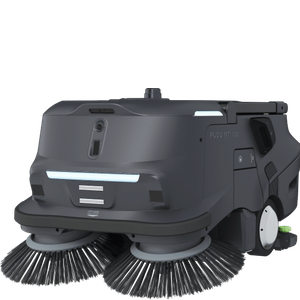
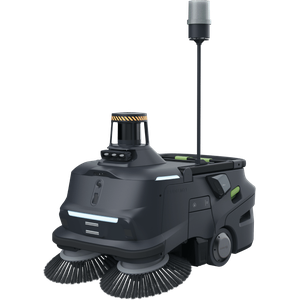
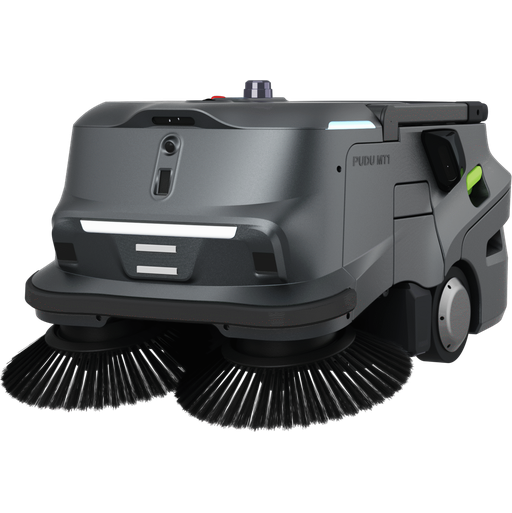
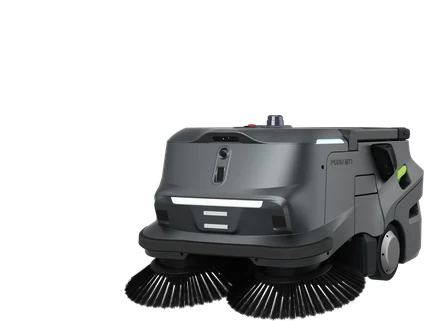
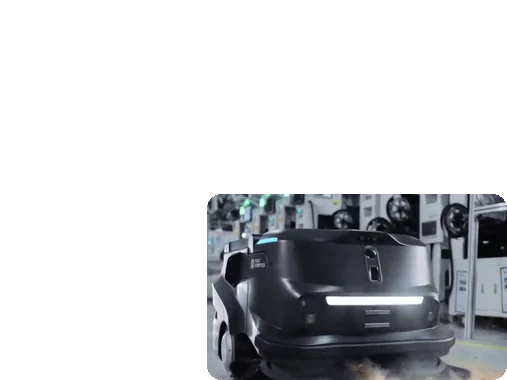
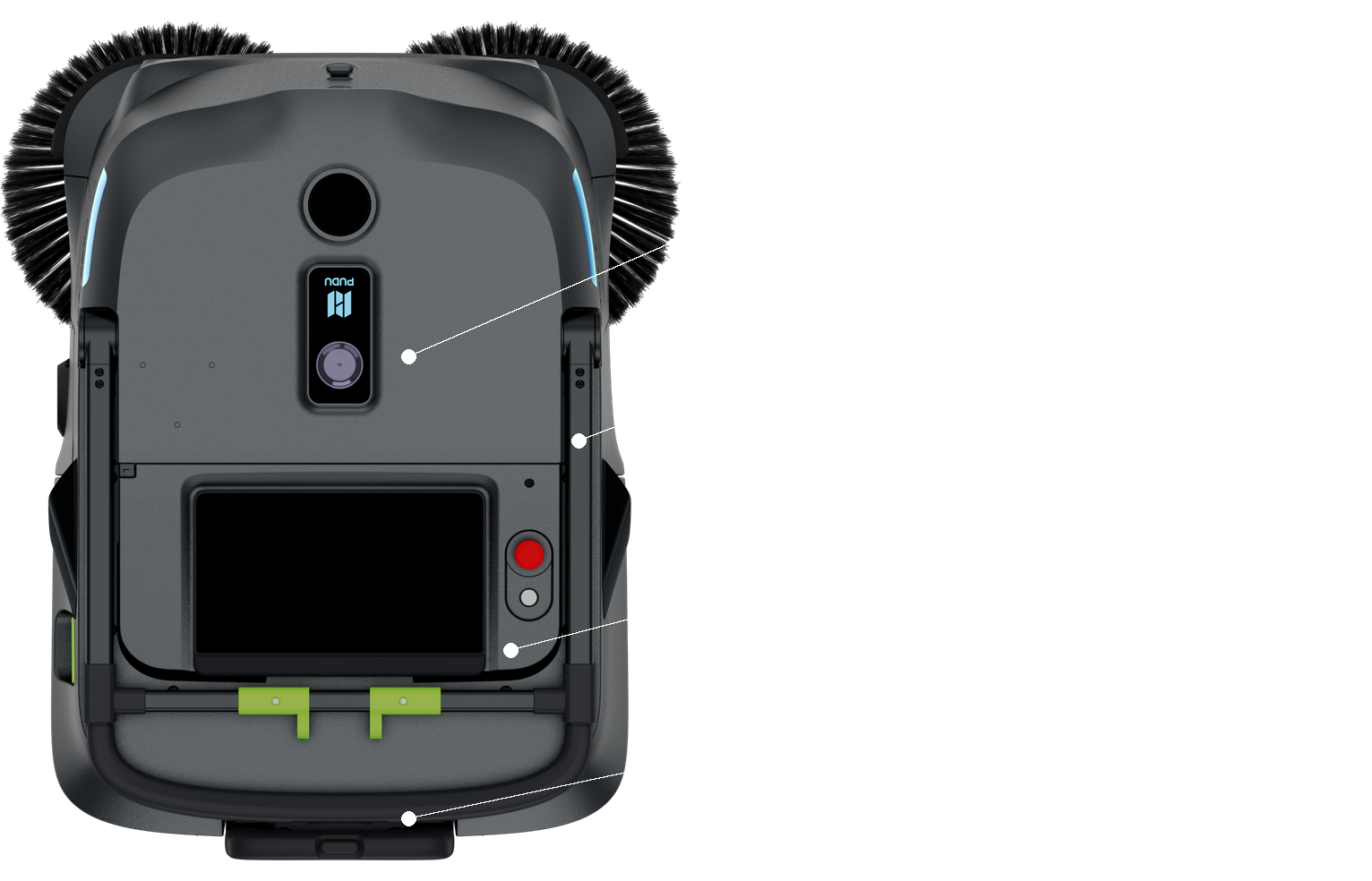
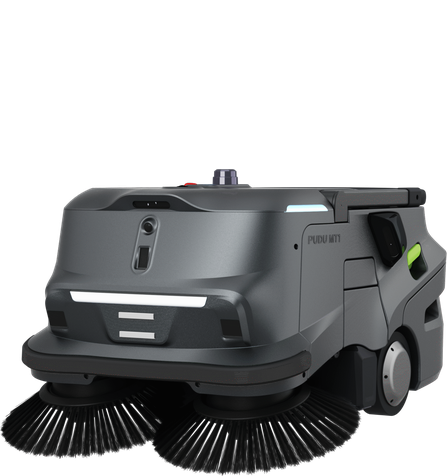
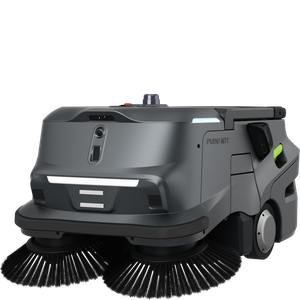
The PUDU MT1 is an AI-powered sweeping robot built for large-scale commercial and industrial spaces. It combines multi-sensor fusion with visual recognition for fully autonomous 24/7 cleaning, with AI debris detection, spot cleaning and seamless navigation in dynamic environments, plus modular components that keep maintenance simple.
Best for
Large-area dry sweeping
Primary task
Sweeping with AI debris detection
Environment
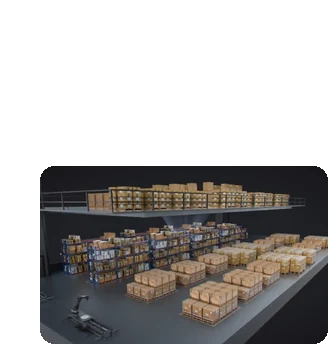
Warehouses, factories, logistics sites, car parks and large commercial spaces
Deployment type
Mapped autonomous deployment, with SPARK site assessment, training and ongoing support
Keep large floors swept without tying people to long patrol routes
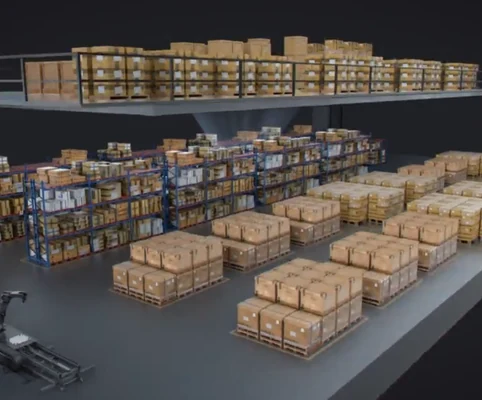
Warehouses and industrial sites cover huge areas where dust and debris build up every day.
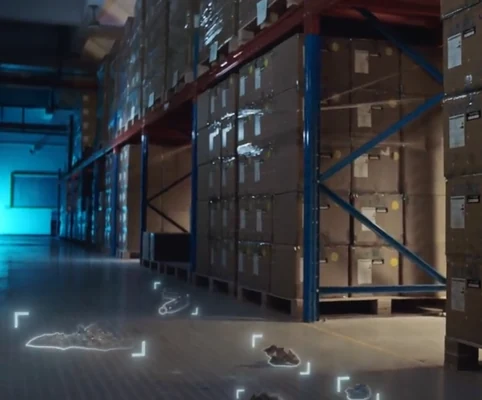
Debris is easy to miss across large areas
Manual sweeping patrols cannot spot every piece of trash on very large floors.
Precise debris detection.
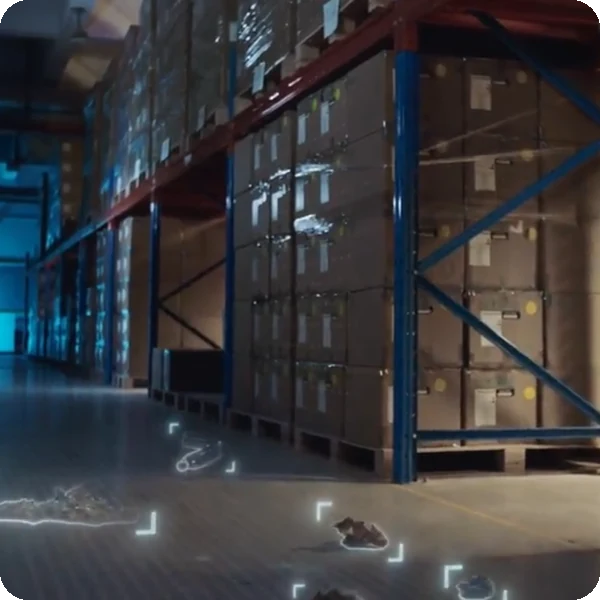
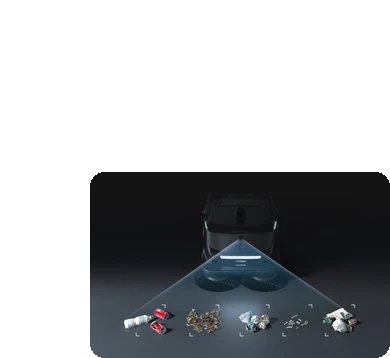
A built-in AI camera identifies trash and debris in real time and automatically triggers spot cleaning so no dirt is missed.
Sweeping stirs up dust
Conventional sweeping spreads fine particles back into the air and onto stock.
Active dust control
High-flow negative pressure ventilation and an efficient filter trap particles in the debris box, preventing secondary pollution.
Busy industrial spaces are hard to navigate
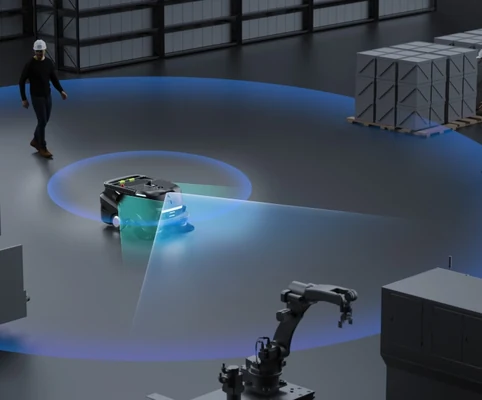
Racking, vehicles and people make autonomous cleaning difficult.
Safe & agile navigation
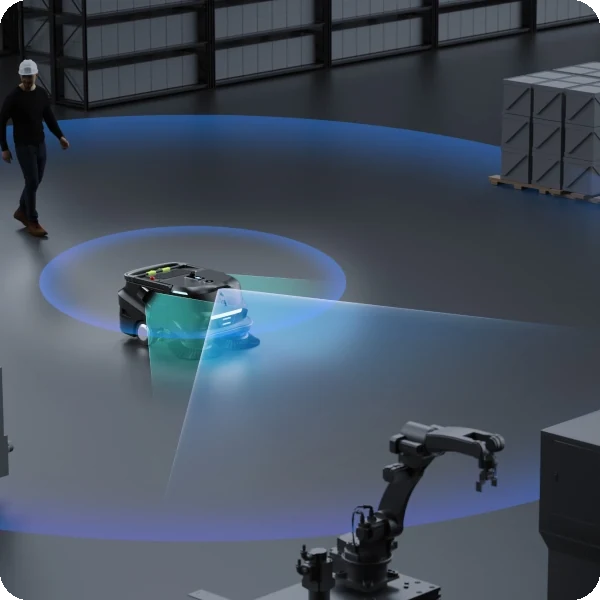
Three-dimensional depth perception and multi-sensor fusion let the MT1 navigate complex spaces and avoid obstacles with ease.
Long routes fill small bins quickly
Frequent emptying interrupts cleaning across large sites.
High-capacity cleaning
A 35 L dust bin, powerful suction and dual-disc brushes cover up to 100,000 m² daily for long-distance dry sweeping.
Key outcomes
Built for large-area sweeping
Cover huge floor areas with a robot designed for industrial-level dry sweeping.
35 L trash bin · 700 mm brush width · up to 1,800 m²/h · up to 100,000 m² daily · 4–8 h runtime.
Keeps large sites swept around the clock without tying staff to routine patrols.
AI Trash
Recognition
Find and clean waste automatically. AI cameras recognise different types of trash in real time and keep learning through database updates.
AI debris detection · ultra-wide scanning field of view · automatic spot cleaning · up to 500% efficiency increase.
Makes routine patrols smarter by cleaning waste as soon as it is found.
Remote Monitoring
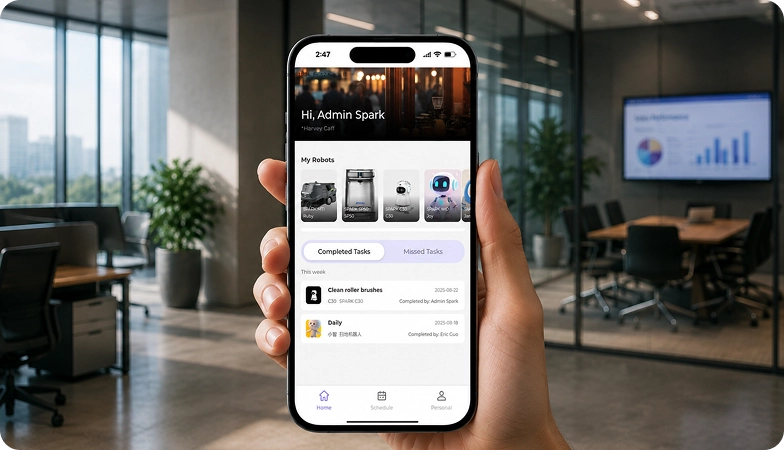
Manage cleaning without being on the floor. The MT1 is managed through an app or cloud platform.
Real-time status tracking · schedule setting · performance reporting.
Gives supervisors clear visibility of cleaning across large sites.
Autonomous operation
Let the MT1 plan and adapt its own routes. SLAM and LiDAR provide accurate path planning in complex environments.
VSLAM + marker + LiDAR SLAM · real-time obstacle avoidance · 55 cm path clearance · modular components.
Maintains consistent cleaning standards without fatigue or variation.
What powers the MT1's intelligent sweeping
Precise debris detection
Active dust control
AI trash recognition
AI spot cleaning
Safe & agile navigation
High-capacity cleaning
How it works
01.
Map or configure
Prepare the MT1 for the site. The environment is mapped and sweeping routes and schedules are configured.
What the MT1 handles
Uses VSLAM, markers and LiDAR SLAM to build its map and plan routes.
Where people step in
Initial mapping and configuration require human input.
The exact SPARK deployment process TBC
02.
Run the workflow
Let the MT1 sweep autonomously. It patrols its routes, detects debris with its AI camera and spot-cleans as it goes.
What the MT1 handles
Carries out sweeping, debris detection, spot cleaning and obstacle avoidance.
Where people step in
People empty the 35 L bin and step in for situations outside the configured workflow. Exact exception and takeover procedures TBC
03.
Monitor and improve
Keep cleaning aligned with your operation through the app or cloud platform, with real-time status and performance reports.
What the MT1 handles
Reports status and performance and continues learning new trash types.
Where people step in
People remain responsible for reviewing performance and deciding when adjustments, maintenance or further configuration are needed. TBC
Use cases and environments
Product in action
MT1 precise debris detection
MT1 AI spot cleaning
MT1 high-capacity sweeping
Technical specifications
Specification
- Cleaning performance
- Daily coverage
- Brush width
- Brushes
- Trash bin capacity
- Cruise speed
- Efficiency increase
- Noise
MT1
- Up to 1,800 m²/h (standard mode)
- Up to 100,000 m²
- 700 mm | 27.6 in
- Dual-disc brushes
- 35 L | 1.2 ft³
- 0.2–1.2 m/s
- Up to 500% (AI spot cleaning)
- TBC
Specification
- Machine dimensions
- Machine weight
- Path clearance
- Trash bin capacity
- Filter
- Components
- Edge cleaning
- Dust bag
MT1
- 840 × 600 × 490 mm
- 65 kg
- 55 cm | 21.7 in
- 35 L | 1.2 ft³
- Efficient dust filter
- Modular
- TBC
- TBC
Specification
- Navigation
- Perception
- AI camera
- Spot cleaning
- Obstacle avoidance
- Path planning
- Dust control
- Safety certification
MT1
- VSLAM + marker + LiDAR SLAM
- 3D depth perception, multi-sensor fusion
- Debris and trash recognition
- Automatic
- Real-time
- Autonomous, optimised routes
- Negative pressure ventilation
- TBC
Specification
- Run time
- Charging time
- Operation
- Auto charging
- Battery capacity
- Battery type
- Rated voltage
- Charging station
MT1
- 4–8 h
- < 3 h
- Fully autonomous 24/7 cleaning
- TBC
- TBC
- TBC
- TBC
- TBC
Specification
- Management
- Status tracking
- Scheduling
- Reports
- AI updates
- Network
- Elevator / door integration
- Fleet view
MT1
- App or cloud platform
- Real-time
- Supported
- Performance reporting
- Deep learning and database updates
- TBC
- TBC
- TBC
Specification
- Environment
- Task type
- Path clearance
- Floor types
- Ingress protection
- Operating temperature
- Max. slope
- Max. threshold height
MT1
- Large commercial and industrial spaces
- Dry sweeping
- 55 cm | 21.7 in
- TBC
- TBC
- TBC
- TBC
- TBC
Specification
- Dust filter
- Disc brushes
- Debris box
- App / cloud platform
- Charging station
- Side brushes
- Spare filters
- Spare parts kit
MT1
- Efficient filter
- Dual-disc
- 35 L
- Included
- TBC
- TBC
- TBC
- TBC
Deployment and integration
From site survey to launch, SPARK prepares your robot for your site, your workflow and your team.

01 — Site survey
We assess your requirements and site conditions to help plan your robot deployment.

02 — Mapping
The operating area is mapped for autonomous operation before handover.

03 — Workflow design
We develop a deployment plan around your site and operational requirements.

04 — Integration
Integration requirements are assessed for each deployment, while tasks, schedules and reports are managed through the app.

05 — Training
SPARK provides user training as part of its after-sales support.

06 — Launch
Launch follows completion of site preparation, mapping, workflow setup and training.

Site Assessment
Understand the facility, floor types, traffic patterns and operational requirements.

Robot Deployment
Introduce the robot into daily operations with minimal disruption.

Mapping
Configure operating areas and routes according to the environment.

Remote Monitoring
Monitor robot operations and receive performance information through the app.

Training & Handover
Provide operators with the knowledge needed to manage the robot day to day.

Ongoing Optimization
Adapt maps and update software as the facility evolves.

Training & Handover
Provide operators with the knowledge needed to manage the robot day to day.

Remote Monitoring
Monitor robot operations and receive performance information through the app.

Ongoing Optimization
Adapt maps and update software as the facility evolves.

Site Assessment
Understand the facility, floor types, traffic patterns and operational requirements.

Mapping
Configure operating areas and routes according to the environment.

Robot Deployment
Introduce the robot into daily operations with minimal disruption.
What SPARK adds
We are not a box shifter. Deployment covers site survey, mapping, workflow design, integration planning, training and launch — so your robot arrives configured for your building rather than dropped at your loading bay.
If the survey shows the robot is wrong for your site, we will say so.
upSPARK and ongoing support
From installation and user training to software updates and on-site maintenance, we provide full after-sales support.

Technology That Keeps Improving
Every SPARK robot is managed through its manufacturer app and cloud platform, where operators can schedule tasks, monitor each robot remotely and review performance reports. SPARK supports you from installation and training through to software updates and maintenance.

maintenance tasks
Routine maintenance is kept simple, with clear schedules for brushes, filters, tanks and other consumables. SPARK guides your team through each task so the robot stays ready to work.

scheduling
Tasks and schedules can be set and adjusted through the app or control panel, so the robot works at the times that suit your site, including out of hours.

guided maintenance
SPARK provides step-by-step guidance for maintenance tasks, helping your team keep the robot running reliably with minimal downtime.

expert support
Our UK-based team provides expert after-sales support, including troubleshooting, on-site maintenance and help with optimising your robot routines.
Safety, compliance and governance
Compliance
Certification and conformity
Declaration of Conformity and certification documents for this robot are available on request for technical and procurement review.
Obstacle handling and safety
360° Environmental Awareness
SPARK robots use onboard sensors to detect obstacles, slow down or stop, and reroute where required. Detailed safety behaviour is covered in the product documentation.
Operating boundaries
Mapped operating areas
The robot operates within the mapped areas and configured routes set up during deployment. Operating conditions are listed in the technical specifications above.
Data and privacy
App and cloud management
Tasks, schedules and reports are managed through the manufacturer app and cloud platform. Details of data handling and privacy are shared as part of deployment planning.
Documents for review
Documentation pack
The user manual, specification sheet and conformity documentation can be shared for technical and procurement review.
Choosing between Spark cleaning robots
MT1
MT1 Vac
MT1 Max
Frequently asked questions
Questions about using the MT1 at your site
What type of facilities can the MT1 clean?
The MT1 is built for large commercial and industrial spaces such as warehouses, factories, logistics sites and car parks.
How much area can the MT1 cover?
The MT1 sweeps up to 1,800 m² per hour in standard mode and can cover up to 100,000 m² daily.
How does the MT1 find debris?
A built-in AI camera recognises trash and debris in real time and triggers automatic spot cleaning, continually learning new trash types.
How long can the MT1 operate?
The MT1 runs for 4–8 hours and recharges in under 3 hours, supporting fully autonomous 24/7 cleaning.
How does the MT1 navigate?
It uses VSLAM, markers and LiDAR SLAM with 3D depth perception and multi-sensor fusion for path planning and obstacle avoidance.
Does the MT1 control dust while sweeping?
Yes. High-flow negative pressure ventilation and an efficient filter trap particles in the debris box, preventing secondary pollution.
How do I request engineering support if there is a problem?
Contact the SPARK support team. We provide after-sales support including troubleshooting, software updates and on-site maintenance for your MT1.