From casual dining and cafés to food halls, bars and event venues, the repeated walk between kitchen, bar and table takes time away from guests. SPARK Robotics helps UK operators use delivery, greeting and cleaning robots where they genuinely support the team.
We look at your floor plan, service style and peak periods, recommend suitable equipment and help your staff put it to work.
The right application depends on how your service runs. For some venues, that means carrying dishes from the pass to the table. For others, it means clearing plates, greeting guests at the door or keeping dining floors clean between sittings.
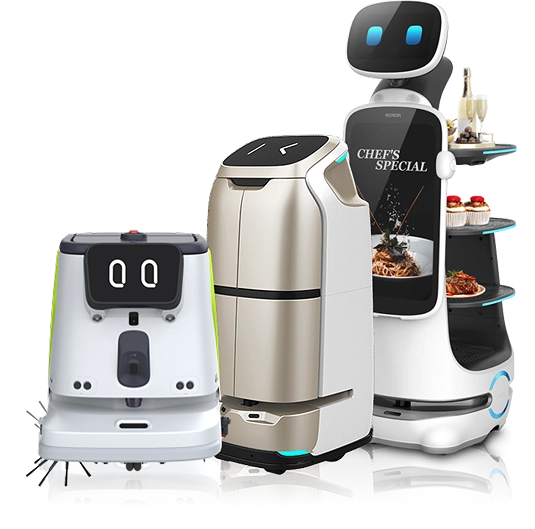
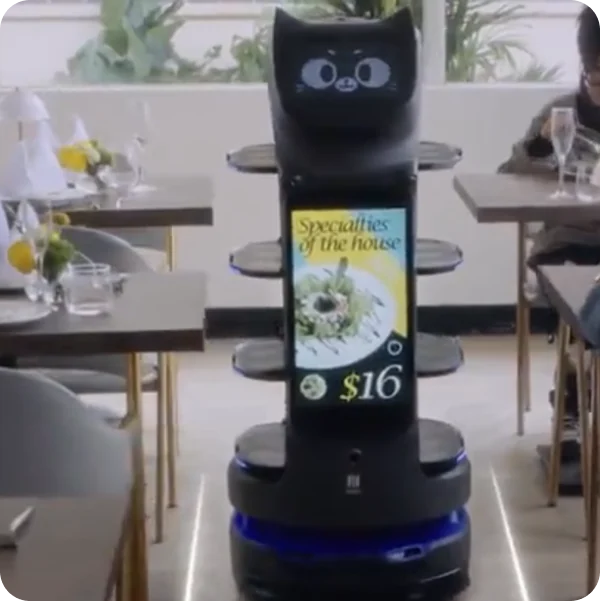
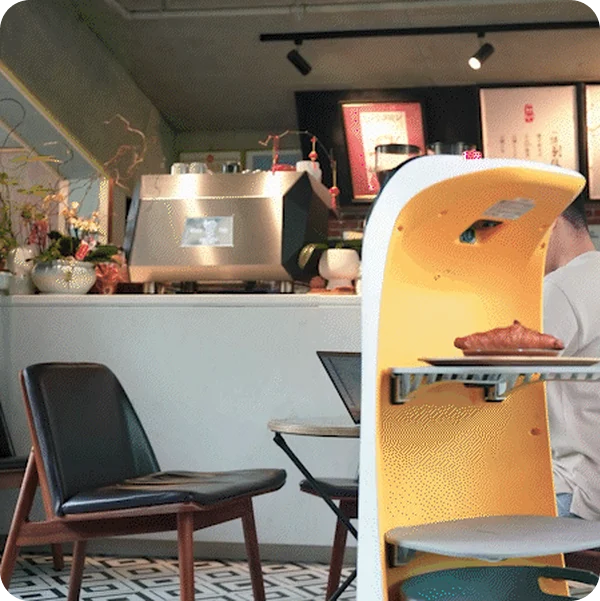
Delivery robots carry dishes along mapped routes between the pass and the dining area, so servers spend more time with guests and less time walking. Staff stay in charge of plating, presentation and every guest conversation.
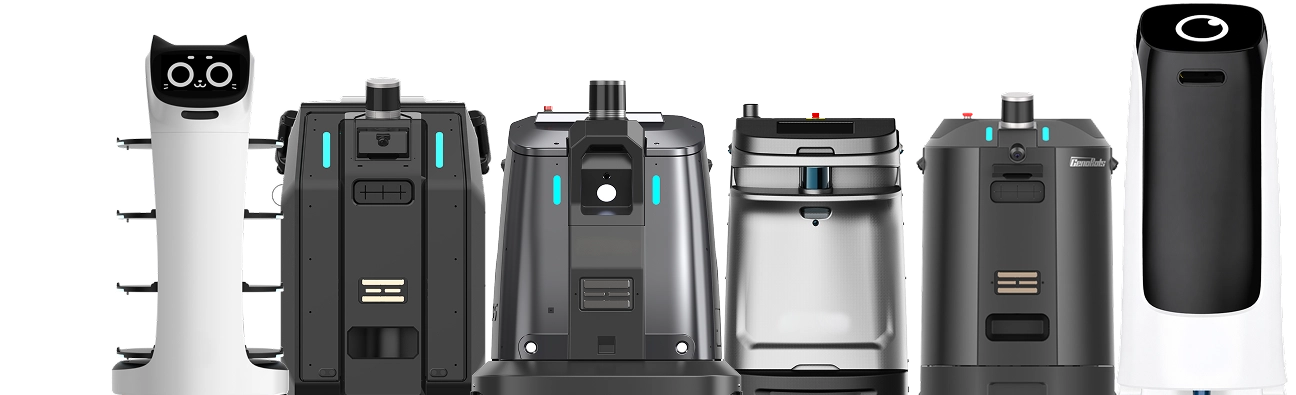
After each course, a robot can carry used plates, glasses and cutlery back to the dish area. Higher-capacity models with an enclosed compartment suit busy venues with long runs to the kitchen.
Reception robots with large screens can welcome guests, lead them to a table and show menus, specials or offers in between deliveries.
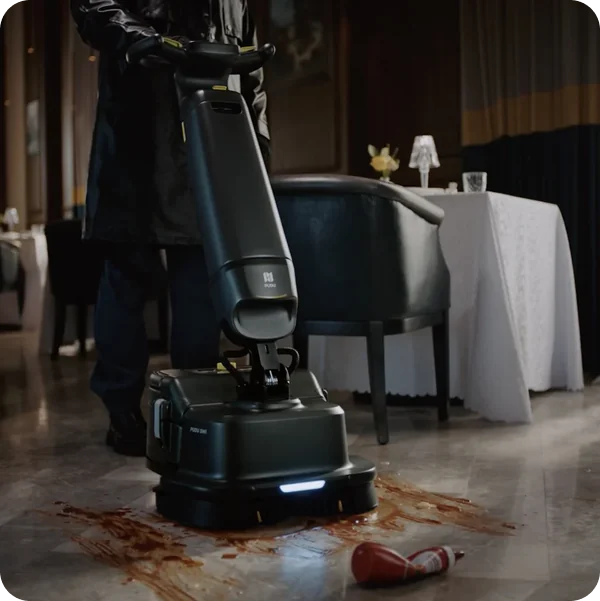
Spills and food debris are part of every service. Compact cleaning robots and operator-led scrubbers help keep dining floors, entrances and back-of-house areas clean before, during and after opening hours.

Support food running and plate clearing while servers stay with guests.
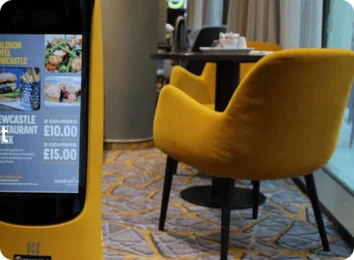
Greet customers, promote offers and carry orders to tables.
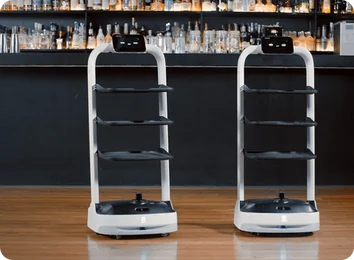
Carry drinks and food across busy floors and seating areas.

Handle repeat runs and clearing across large seating areas.
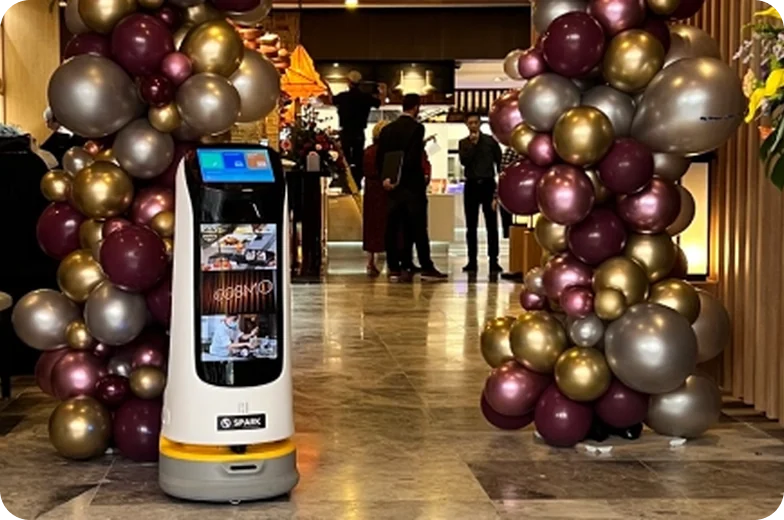
Restaurants across the UK are using robots to cope with staff shortages, longer opening hours and busy weekend service. Our restaurant automation story looks at where robots fit and what to plan for before introducing one.
We also work with venues across cleaning and reception applications. Explore the customer stories relevant to your venue and the task you want to improve.
We discuss the repeated journeys or cleaning work you want to improve.
We review routes, surfaces, access, foot traffic, charging and staff handovers.
We agree what the demonstration or trial should show and how success will be assessed.
We configure the agreed solution, train your team and set out the support arrangements in your proposal.
The result is a recommendation based on your operation, rather than a robot selected from a catalogue.
It depends on aisle widths, the space around tables, floor surfaces and how busy the room gets. A site assessment and short demonstration show whether a robot can move through your venue safely at peak times.
No. Robots take on repeated carrying and clearing journeys. Your team still takes orders, serves at the table and looks after guests. They simply spend less time walking.
Most of our delivery robots carry three or four trays with a combined load of around 40 kg. Higher-capacity models such as HolaBot carry up to 60 kg in an enclosed compartment.
Delivery robots work best on level, continuous floors. Small thresholds and gentle ramps can often be managed, but steps cannot. We check every route during the site assessment.
Yes. Many venues start with one robot on a single task, such as food running or plate clearing, then add more once the team is comfortable with it.
Tell us about your site and the task you want to improve. We’ll help you identify the most useful next step.