Industrial robots. Safer, faster material flow.

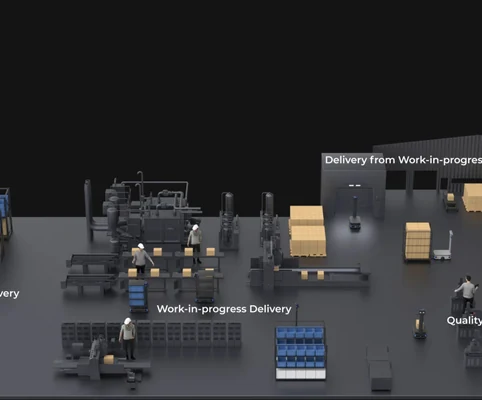
SPARK’s industrial and logistics robots move parts, totes and pallets between production, storage and dispatch, helping factories and warehouses keep goods moving with fewer manual trolley and forklift runs.

Industrial & Logistics Robots

WHY SPARK

Why choose SPARK industrial & logistics robots

Every robot is selected, deployed and supported by SPARK, with a site assessment, training and ongoing support for UK sites.

LOGISTICS MADE SIMPLE

From totes to full pallets.

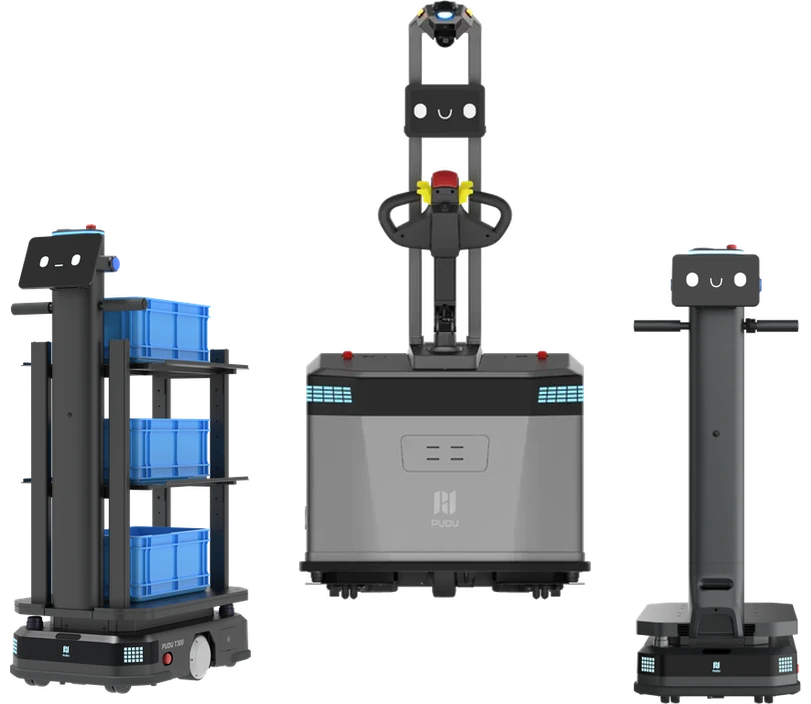
Delivery robots for loads up to 300 kg and 600 kg, and an AI-native pallet robot for loads up to 2,000 kg.

Choosing between Spark industrial robots

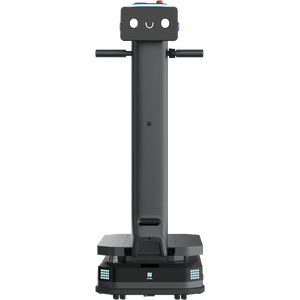
PUDU T300 industrial delivery robot T300
PUDU T600 industrial delivery robot T600
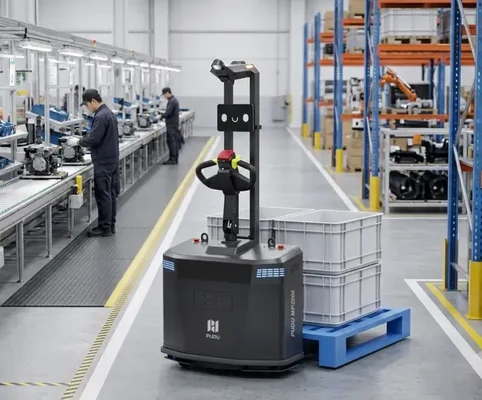
PUDU MP2000 autonomous forklift MP2000
Primary Task
Material delivery & towing
Heavy-payload rack transport
Autonomous pallet handling
Best For
Factories & logistics sites
Warehouses & multi-floor sites
Warehouses & distribution centres
Max. Load
300 kg
600 kg
2,000 kg
Run Time
12 hrs unloaded / 6 hrs loaded
12 hrs unloaded
12 hrs unloaded / 6 hrs max. load
Charging Time
2 hrs (to 90%)
2 hrs (to 90%)
~2 hrs
Navigation
VSLAM & LiDAR SLAM
VSLAM + LiDAR SLAM (Upright)
3D LiDAR-SLAM, VSLAM
Min. Passage / Aisle
60 cm
65–70 cm
2 m right-angle stacking aisle

Industries we serve

Logistics & Warehousing

Logistics & Warehousing

Moving goods between receiving, storage and dispatch.

Industrial & Manufacturing

Industrial & Manufacturing

Line-side delivery of parts and finished goods.

Healthcare & Care Homes

Healthcare & Care Homes

Heavier supply runs across large hospital sites.

Airports & Transport Hubs

Airports & Transport Hubs

Supplies and stock moved through back-of-house areas.

Results and
customer stories

Frequently asked questions

Everything you need to know before you automate

Industrial & Logistics Robots
How much can the robots carry?

The T300 carries up to 300 kg, the T600 up to 600 kg, and the MP2000 pallet robot handles loads of up to 2,000 kg.

Yes. They use LiDAR, cameras and other sensors to detect people and vehicles and slow down or stop. Routes, zones and speeds are agreed during deployment.

Usually not. Robots map your existing site and follow virtual routes. We check aisle widths, floors and doors during the site assessment.

Yes. Most operators start with one route or task, measure the results, then add robots or routes.

Start a conversation

Explore what could
work at your site

Tell us about your site and the task you want to improve. We’ll help you identify the most useful next step.